
WOODEN DECKING – CAPE TOWN
Are you looking for decking that offers natural warmth and character?
Momar offers quality natural wood decking that gives your outdoor area a timeless, inviting feel.
We supply a range of hardwoods and treated softwoods, each chosen for durability, grain pattern, and colour. Our timber is sourced from trusted suppliers and prepared to perform in the South African climate, resisting warping, cracking, and insect damage.
Wood decking develops a rich patina over time, adding depth and personality to your space. With proper care, it will serve you for decades while keeping its natural charm.
If you’re unsure which timber suits your home, our team can explain the differences in maintenance, lifespan, and appearance, so you can choose with confidence.

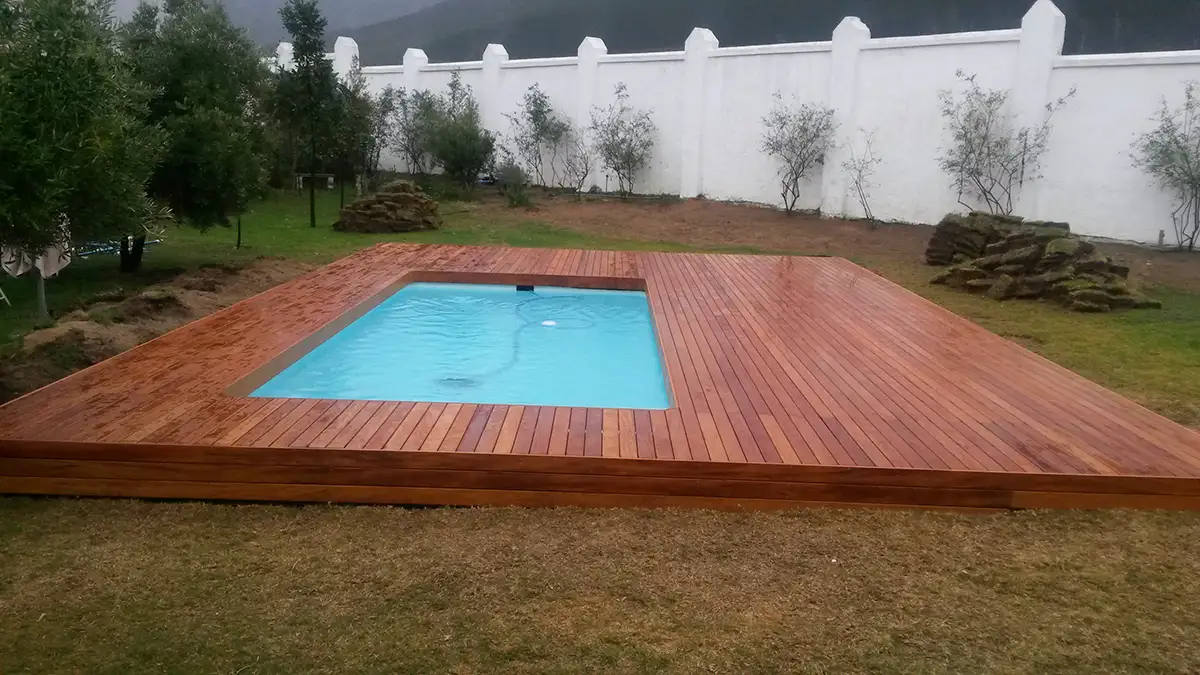
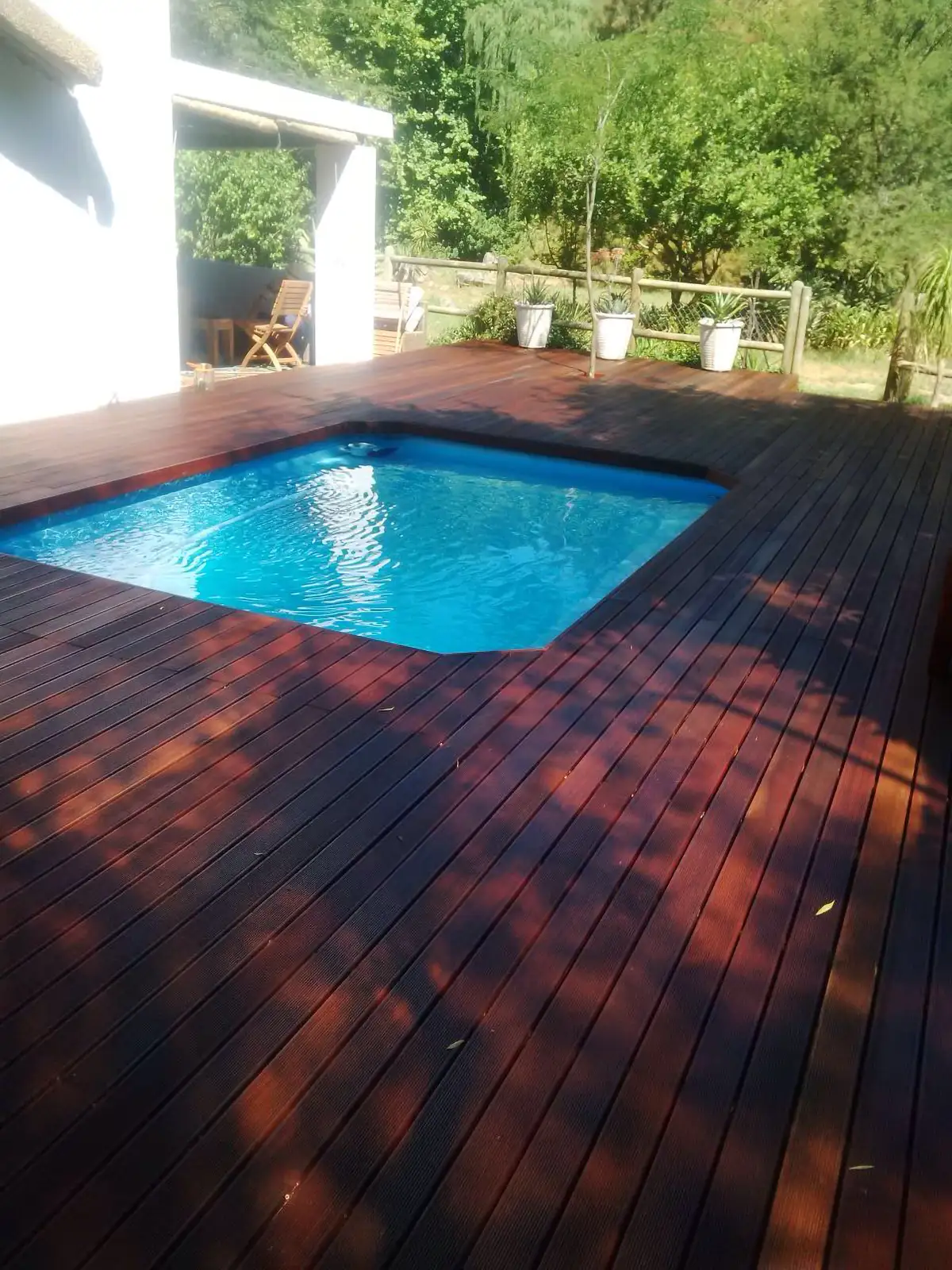
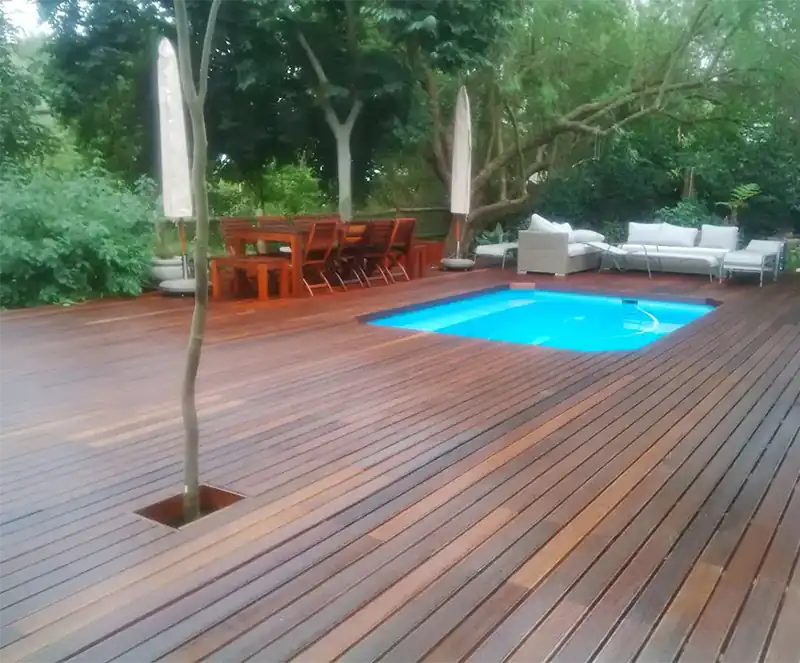
EIGHT REASONS to choose natural wooden decking for your outdoor space

Aesthetic appeal
Real wooden decking offers a warm, timeless look, thanks to its grains and colour variations. Each board is unique, adding character and authenticity to outdoor spaces. You can stain the timber to achieve a uniform tone or leave it untreated to weather naturally into a silvery-grey finish. Wood also develops a rich patina over time, which many homeowners appreciate for its organic, lived-in appearance. Because it’s adaptable to different design styles, being modern, rustic, or traditional, it remains a popular choice for outdoor living areas.


Durability
Natural wooden decking can last for decades when the right timber is chosen and maintained correctly. Certain species like teak, cedar, and redwood have natural oils and tannins that resist rot, decay, and insect damage. Even more common options such as pine can perform well when pressure-treated or sealed.
Regular sealing or oiling helps protect against moisture, UV exposure, and surface cracking. Good installation practices—such as leaving gaps for ventilation and using stainless steel fixings—also extend the life of the deck. With these measures, natural wood can remain structurally sound and visually appealing even in harsh outdoor conditions.

Comfort
Wooden decking offers a natural feel underfoot that’s comfortable to walk on barefoot. Unlike concrete or many composite materials, timber doesn’t trap as much heat, so it stays cooler in direct sun. The surface also has a slight give, making it softer on joints when standing or walking for long periods.
Different finishes can add to the experience — smooth-sanded boards are gentle on bare feet, while lightly brushed or grooved profiles provide extra grip without feeling harsh. Wood also absorbs less glare than concrete, creating a more pleasant environment for relaxing outdoors.

Customizability
Natural wooden decking is highly versatile and can be adapted to almost any design or layout. Boards are easy to cut and shape, making it possible to work around pools, curves, garden features, or tight spaces. This flexibility allows for creative patterns such as diagonal layouts, herringbone, or picture-frame borders that add visual interest.
Another advantage is that wood can be sanded and refinished multiple times. This means you can refresh the surface, change the colour with a new stain, or restore worn areas without replacing the entire deck. Over its lifespan, timber can be adapted to match evolving styles and preferences, giving it long-term value in both function and appearance.

Environmental benefits
When sourced from well-managed forests, natural wooden decking is a renewable material that supports sustainable forestry practices. Wood is also biodegradable, breaking down naturally at the end of its life rather than adding to long-term waste.
Compared to synthetic decking, timber has a lower carbon footprint because it requires less energy to produce and process. It also stores carbon throughout its lifespan, helping to offset emissions. Choosing certified timber (such as FSC or PEFC) gives you peace of mind that the wood comes from responsibly managed sources.
At the end of its service life, wooden decking can often be repurposed, recycled, or composted, further reducing environmental impact.

Value addition
Natural wooden decking adds long-term value to a property in several ways. Its warm appearance and quality finish create an inviting outdoor living area that enhances everyday use while also appealing to potential buyers. Homes with well-maintained timber decks often see stronger resale value because buyers associate natural wood with durability, comfort, and timeless style.
Beyond aesthetics, wood is a renewable and biodegradable material when responsibly sourced, giving it an edge over synthetic alternatives. It carries a lower carbon footprint during production and can be repurposed or recycled at the end of its life. This combination of environmental responsibility and lifestyle appeal makes natural wooden decking both a practical investment and a selling point.

Repair and maintenance
One of the advantages of natural wooden decking is how straightforward it is to repair. If a board becomes damaged, it can be replaced individually without disturbing the rest of the structure. This makes repairs quicker and more affordable compared to materials that require larger sections to be redone.
Everyday wear such as scratches, dents, or weathering marks can often be sanded out, then resealed or oiled to restore the original look. Regular cleaning, along with periodic sealing or staining, keeps the deck protected from moisture, UV rays, and general wear. With proper care, a timber deck can be refreshed multiple times over its lifespan, maintaining both appearance and structural integrity.


Cost
Natural wooden decking is often more affordable upfront compared to many composite or specialty materials, making it a cost-effective choice for homeowners looking to upgrade outdoor spaces without overspending. The wide range of available timber species means you can choose a type that fits your budget, from economical pressure-treated pine to premium hardwoods like teak or balau.
Ongoing costs can also be managed — routine cleaning and resealing are straightforward and typically less expensive than replacing large composite sections if they become damaged. Because individual boards can be repaired or replaced, long-term maintenance is flexible and affordable. When properly cared for, natural wood offers excellent value over its lifespan, balancing initial savings with long-term durability and appeal.
